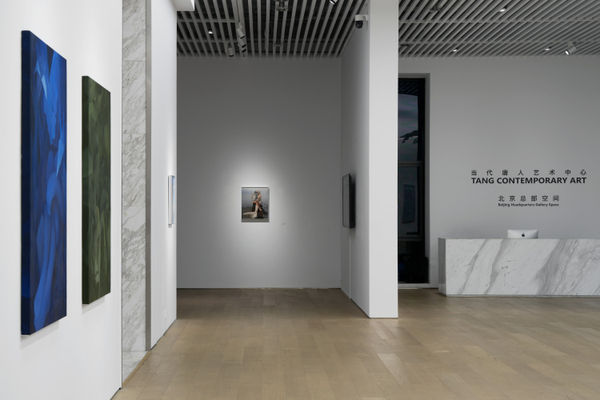
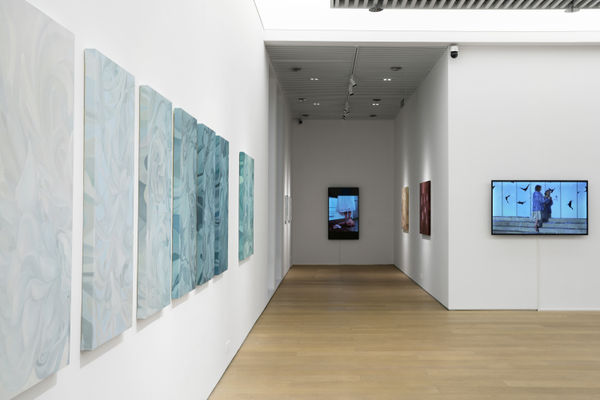
INNER CALENDAR, MARCH 05 - APRIL 18, 2026: Personal exhibition at Tang Contemporary Art, Beijing, China

... The exhibition proposes time as an emergent property of subjectivity itself: a rhythm produced through ongoing processes of internal negotiation. Each ‘month’ marks not the passage of objective time, but a moment in which the subject reorganises its own conditions of existence...
Tuesday to Saturday, 11:00 am - 5.30 pm
TANG CONTEMPORARY ART, BEIJIng, china
Curated by Yonni Park and Jeeeun Hong
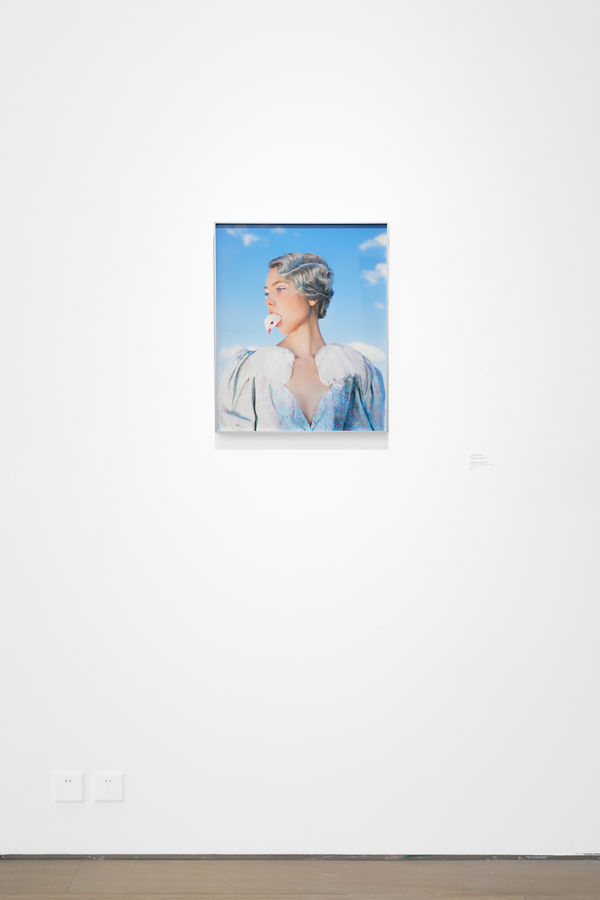
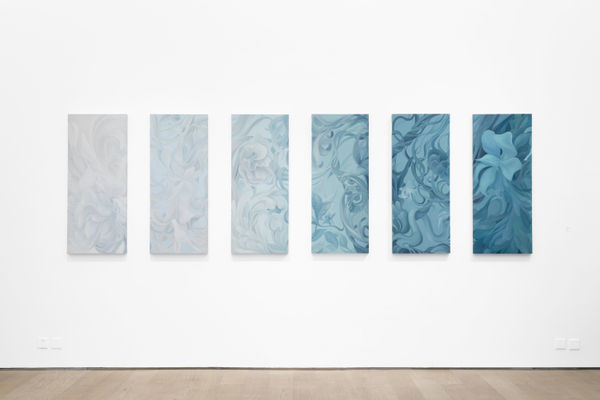
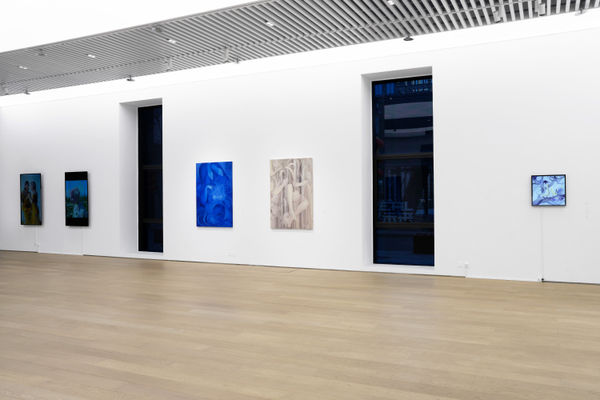
Ellen Sheidlin’s solo exhibition Inner Calendar reconsiders time not as an external, measurable order, but as a condition that emerges from within the subject itself. Here, the ‘month’ functions less as a chronological unit than as a structural and affective register—a way of marking shifts in perceptual density, states of equilibrium, and moments of internal reconfiguration. Rather than documenting events, each work articulates a distinct internal phase: a point at which form, sensation, and awareness temporarily cohere. These phases do not unfold linearly but resonate across the exhibition, forming a cyclical and recursive temporal field. Inner Calendar thus does not represent the passage of time; it renders visible the conditions through which temporality is internally constituted.

Within Sheidlin’s practice, the self does not appear as a fixed or autonomous entity, but as a relational structure, continuously shaped through processes of adjustment, translation, and integration. Form emerges through contact with external conditions, yet this contact does not result in passive assimilation. Instead, external pressures are gradually internalised and reorganised, becoming integral to the subject’s own structural coherence. In this sense, form operates less as an expressive surface than as a stabilising framework—an adaptive system through which the subject negotiates its own persistence.
Repetition plays a critical role within this framework. It functions not as redundancy, but as a generative mechanism through which stability is produced and sustained. Forms return, fold inward, and recalibrate internal tensions, establishing provisional points of balance. Each ‘month’ may be understood as one such point of condensation: a temporary convergence of forces in which experience assumes structural clarity. These moments are neither fixed nor self-contained, but operate as thresholds—sites of transition through which one state yields to another.
This logic of transition unfolds through alternating movements of contraction and expansion. Forms gather into concentrated centres, only to disperse again, extending beyond their previous limits. These shifts do not signal rupture, but transformation. Each configuration retains traces of prior states, allowing time to accumulate as structural memory rather than disappear as sequential loss. Temporality, in this context, is neither linear nor teleological, but recursive—formed through cycles of return, recalibration, and renewal.

Importantly, the calendar invoked here is not imposed from outside, but generated from within. The exhibition proposes time as an emergent property of subjectivity itself: a rhythm produced through ongoing processes of internal negotiation. Each ‘month’ marks not the passage of objective time, but a moment in which the subject reorganises its own conditions of existence. The calendar becomes, in this sense, a diagram of interior transformation.
Colour and form function as material agents in the articulation of this internal temporality. Colour operates not merely as surface, but as an atmospheric field—an immersive condition that shapes perceptual experience. Form, in turn, registers tensions between containment and release, coherence and dispersal. Together, they construct pictorial spaces that are less representational than operative: spaces in which subjectivity is actively configured rather than depicted.
While Sheidlin’s work resonates with the legacy of abstraction—particularly its emphasis on form as a vehicle for perception—it departs from the modernist pursuit of formal autonomy. Her forms do not assert independence from lived experience, but remain contingent, responsive, and structurally vulnerable. They foreground formation as an ongoing process rather than a resolved state. Form, here, is not an end point but a condition of becoming.
Inner Calendar ultimately frames subjectivity as a temporal structure—one that is continuously assembled through cycles of integration, consolidation, and transformation. Each ‘month’ represents not a discrete interval, but a structural event: a moment in which the subject reconfigures its own internal coherence. Through these recursive movements, the self emerges not as a stable centre, but as a dynamic field, shaped through its own rhythms of contraction, expansion, and return.
Rather than situating the subject within time, Sheidlin’s work suggests that the subject itself produces time. Inner Calendar traces this process with precision and restraint, offering a sustained meditation on how form, perception, and temporality converge in the ongoing construction of the self.
Publications:
- Harper's BAZAAR Art:
[https://mp.weixin.qq.com/s/YgbfdsxlPfY8BmwxT7Af4Q]
- OCULA:
[https://ocula.com/art-galleries/tang-contemporary-art/exhibitions/ellen-sheidlin-inner-calendar/ ] - ICON Art:
[https://www.iconmagazineart.com/blog/tang-contemporary-art-ellen-sheidlin-inner-calendar] - Tang Contemporary Art:
[https://mp.weixin.qq.com/s/eBJSW-dYL9SPqJvlYNMnrw]